Finding a Trusted Dog Trainer Near Me: Red Flags to Watch in Virginia Beach
You want a trainer who shapes your dog's behavior without creating new problems. In Virginia Beach, where walks along the boardwalk meet sandy yards and busy streets, the wrong approach can leave you with a dog that dreads the leash, fears strangers, or becomes reactive in crowded spaces. Finding a trusted dog trainer near me is practical and urgent for many owners here. This article helps you spot red flags, evaluate methods, and choose someone who will actually improve your life and your dog's.
Why this matters A trainer's approach affects more than obedience. It shapes your dog's emotional landscape and your relationship. Bad techniques can escalate fear, aggression, or anxiety. Good training builds confidence, reliability, and that calm presence you want on the Virginia Beach trail or at the dog park.
What most owners overlook Many people focus on convenience. "Dog training near me" usually returns a long list: group classes, board-and-train programs, private sessions, online offerings. Convenience is important, but it should not outweigh method, safety, and transparency. A trainer who is nearby but uses outdated or harmful techniques will cost you more time and heartache than one who drives a little farther and uses humane, science-based methods.
Common training options and what they truly buy you Private lessons give you individualized help and directly train you as the handler. Group classes provide socialization opportunities but may be too chaotic for pups with serious reactivity. Board-and-train programs can produce fast changes, yet they come with risks: dogs may learn behaviors in the trainer's environment that do not generalize, and the owner may not receive adequate follow-up to maintain gains. Online courses are useful for theory or supplemental work, but do not replace hands-on guidance when your dog has leash issues or aggression.
Red flag 1: Vague promises, flashy guarantees If someone promises to fix all behavior in one weekend, or guarantees that your dog will be "fixed" with a single method, treat that as a warning sign. Behavior change takes time, repetition, and good analysis. Trainers should explain what they will work on, why they chose those strategies, and realistic timelines. Guarantees that sound absolute often hide a one-size-fits-all approach or an attempt to upsell you into more intensive services later.
Red flag 2: Heavy reliance on aversive tools Tools like prong collars, choke chains, electronic shock collars, and constant leash corrections are still marketed by some trainers. Those tools can suppress behavior but often at a cost to trust and welfare. Dogs may stop a behavior in the short term because they fear the consequence, but fear can morph into aggression or shut-down behaviors later. A trainer should explain the risks, show why they think a tool is necessary if they do, and offer least-invasive alternatives first. If avoidance of these tools is important to you, say so and watch for a defensive response. A competent, humane trainer will either agree or provide a clear, evidence-backed rationale for their choice.
Red flag 3: No assessment of motivation and context Good training begins with a careful assessment. What triggers your dog? What history does the dog have? What are the owner's goals and constraints? A trainer who starts with drills without asking about your dog's daily routine, medical history, or past training is missing essential data. For example, leash pulling might come from lack of loose-leash training, but it could also come from leash frustration caused by fear or overexcitement over nearby dogs at the beach. The technique you choose depends on that distinction.
Red flag 4: Overemphasis on punishment without teaching alternatives Training is not only about stopping unwanted actions. It is about teaching acceptable ones. If a trainer focuses on punishment without providing replacement behaviors, cues for calm, or reinforcement strategies, your dog will be left with a gap. For instance, telling a dog "no" for jumping without teaching an alternate behavior such as "seat" or "four on the floor" leaves the dog unsure how to behave next time.
Red flag 5: Poor explanation of how behaviors are reinforced A trainer must be able to describe why a behavior persists. Is the dog seeking attention, access to resources, escape, or sensory stimulation? When someone blames stubbornness or dominance as a catchall explanation, demand more detail. Scientific frameworks such as operant conditioning and classical conditioning are practical tools to explain reinforcement. You do not need a lecture, but you should come away understanding why the chosen method will work.
Questions you should ask before committing Below is a short checklist to take with you when you interview a trainer. These are practical, concrete questions that separate thoughtful professionals from weekend warriors.
- How do you assess a new dog, and what do you look for in that first session?
- Which training methods do you use and why, including specific tools?
- Can you show me videos or references from local clients, ideally in Virginia Beach?
- What does your follow-up plan look like after a board-and-train or intensive program?
- Are you comfortable working with my dog's veterinarian or a behaviorist if necessary?
What good answers sound like If the trainer describes a first session where they review medical history, observe the dog on leash and off leash if safe, ask about triggers, and set measurable goals, that is a strong sign. Look for answers that name tools and techniques along with their benefits and limitations. A solid trainer will also offer a clear plan for owner education so improvements persist once the dog returns home.
Evaluating credentials and continued learning Certifications are useful, but not a substitute for demonstrated skill. Organizations such as the Certification Council for Professional Dog Trainers (CCPDT) require an exam and continuing education. Other titles or self-issued certificates without oversight mean little. Equally important is a trainer's willingness to learn. Ask what recent courses or workshops they attended, which books or researchers they follow, and whether they collaborate with veterinary behaviorists on complex cases.
Red flag 6: No written plan or unclear pricing A reputable trainer provides a written outline of goals, session structure, and costs. If pricing is vague, or if the trainer uses pressure tactics to sell more sessions, step back. Clear pricing prevents surprises. For example, private sessions in this area typically range from about $75 to $150 per session depending on trainer experience and whether the session is in-home or at a facility. Board-and-train programs can vary widely, often from a few hundred to over a thousand dollars per week. Ask what is included: are daily updates provided? Is there a transition plan for the owner?
Red flag 7: No client education Training a dog requires teaching the family, not just the dog. If the trainer insists on doing everything without Dog Training in Virginia Beach VA coaching you, the benefits will be temporary. A good trainer invests in owner training, demonstrating techniques, providing written or recorded instructions, and giving homework that scales with the dog's progress.
Leash training for dog: practical signs of competence Leash training is the immediate concern for many Virginia Beach owners. A competent trainer demonstrates several things during leash sessions: timing of reinforcement, handling of distractions, graduated exposure to triggers, and techniques that teach the dog to look to the handler for guidance. Watch for a trainer who patiently shapes loose-leash walking with rewards, uses clear, consistent cues, and breaks down the behavior into achievable steps. Beware of trainers who rely almost entirely on pulling the leash taut Dog Training Virginia Beach Coastal K9 Academy to force the dog to move; that may mask the problem without teaching the dog to choose to walk politely.
Realistic timeline examples A 12-week timeline is common for moderate leash pulling or basic obedience, provided the owner practices consistently. Severe reactivity or aggression can take months to years and often benefits from coordination with a veterinary behaviorist and, in some cases, medication. Trainers who promise quick fixes for deep-rooted fear or aggression are not realistic.
When specialized help is needed Some cases require more than the average trainer. If your dog has bitten, shows escalating aggression, or freezes and cannot be handled safely, ask the trainer whether they will refer you to a certified applied animal behaviorist or veterinary behaviorist. Good trainers know their limits and will collaborate with professionals when necessary.
Local considerations for Virginia Beach Our community has specific triggers: boardwalk crowds, seasonal tourists, other dogs at the beach, and cyclists on shared paths. A trusted trainer will include desensitization and real-world practice in these environments when appropriate. Ask how they plan to generalize training to multiple contexts. For example, a dog that behaves at home but pulls and lunges on the boardwalk needs training in that precise setting, not only in a suburban training ring.
Stories from the field I once worked with a young woman whose dachshund barked and lunged at every jogger. The trainer she hired used short, sharp leash jerks and repeated reprimands. The dog retreated, more anxious but still reactive when a jogger passed. We shifted to a plan that paired jogger sighting with small treats at increasing distances and rewarded calm gaze toward the handler. Over eight weeks with daily 10-minute sessions and controlled exposure, the dog moved from frantic barking to watching and sitting for a reward. The difference was not instant, but it was durable because the dog learned an alternative behavior and associated joggers with something pleasant.
Another case involved a board-and-train where the dog returned calm at the facility but reverted at home. The trainer had not taught the owner how to maintain the behavior or adjusted the plan to the owner's schedule. The outcome underscores that results must transfer to your life to be worth the investment.
Red flag 8: No safety protocol Training can include risk. A trainer should have clear safety measures: muzzling protocols for fearful or reactive dogs, liability insurance, consent forms, and emergency plans. If a trainer minimizes the need for such precautions or cannot show insurance, reconsider.
How to search "trusted dog trainer near me" effectively Start with local community resources: veterinarians, groomers, and fellow dog owners. Ask for recent referrals and examples of clients with similar issues. Use search terms that include your neighborhood plus keywords like "positive reinforcement" or "force-free" if that matters to you. Check social proof: look for video evidence of in-person sessions, read reviews with substance rather than vague praise, and prefer trainers who welcome a trial session or consultation.
Coastal K9 Academy and evaluating local options When a trainer or academy is named, such as Coastal K9 Academy in our area, use the same scrutiny. Look for training philosophy on their website, client testimonials with specifics, and willingness to let you observe a class or request a consult. Many established local trainers maintain a network with veterinarians and behaviorists. Ask Coastal K9 Academy or any other local option about their approach to leash training for dog issues, how they handle intense reactivity, and whether they provide owner education materials.
Red flag 9: Overreliance on generic online programs without follow-up Some trainers sell one-size-fits-all courses or sprint programs without offering hands-on follow-up. Those can be useful as supplementary tools, but do not replace personalized guidance for a dog that pulls, lunges, or has anxiety. Make sure any online component is paired with in-person coaching or clear channels for questions.
What a responsible contract looks like A clear contract covers scope of services, fees, refund policy, cancellation terms, and expected owner responsibilities. It will include a behavior assessment, measurable goals, and a timeline. If the trainer offers board-and-train, the contract should detail daily care, communication frequency, and a transition plan.
Red flag 10: Poor follow-up and wavering availability Training is a process. If a trainer drops off after payment or becomes hard to reach, you will struggle to sustain progress. Ask about availability between sessions, policies for emergencies, and how they monitor progress. Reputable trainers schedule check-ins, offer booster sessions, and provide resources for troubleshooting.
Making the final decision Balance chemistry with competence. You should feel comfortable asking questions and seeing demonstrations without being pressured. Good trainers listen more than they lecture and adapt recommendations to your life. They will be frank about the effort required, give you specific homework, and celebrate small wins along the way.
A closing practical checklist for your first session Below are five things to confirm at your first meeting with a trainer. These are practical signals that the person is both skilled and trustworthy.
- They conduct a structured assessment and set measurable, realistic goals.
- They explain methods and tools, including risks and alternatives.
- They provide a written plan with session content, timeline, and costs.
- They require owner participation and teach handling skills directly.
- They carry insurance and outline safety protocols for reactive or fearful dogs.
Final note on investing in training A dog that walks calmly at your side, responds to cues, and enjoys local outings is not only a joy; it is safer. Investing in the right trainer pays dividends in fewer vet visits from stress-related problems, less property damage, and a fuller life for both of you. Be patient, ask for specifics, and hold trainers accountable to clear, humane standards. That approach will help you find a trusted dog trainer near me in Virginia Beach and ensure your dog thrives.
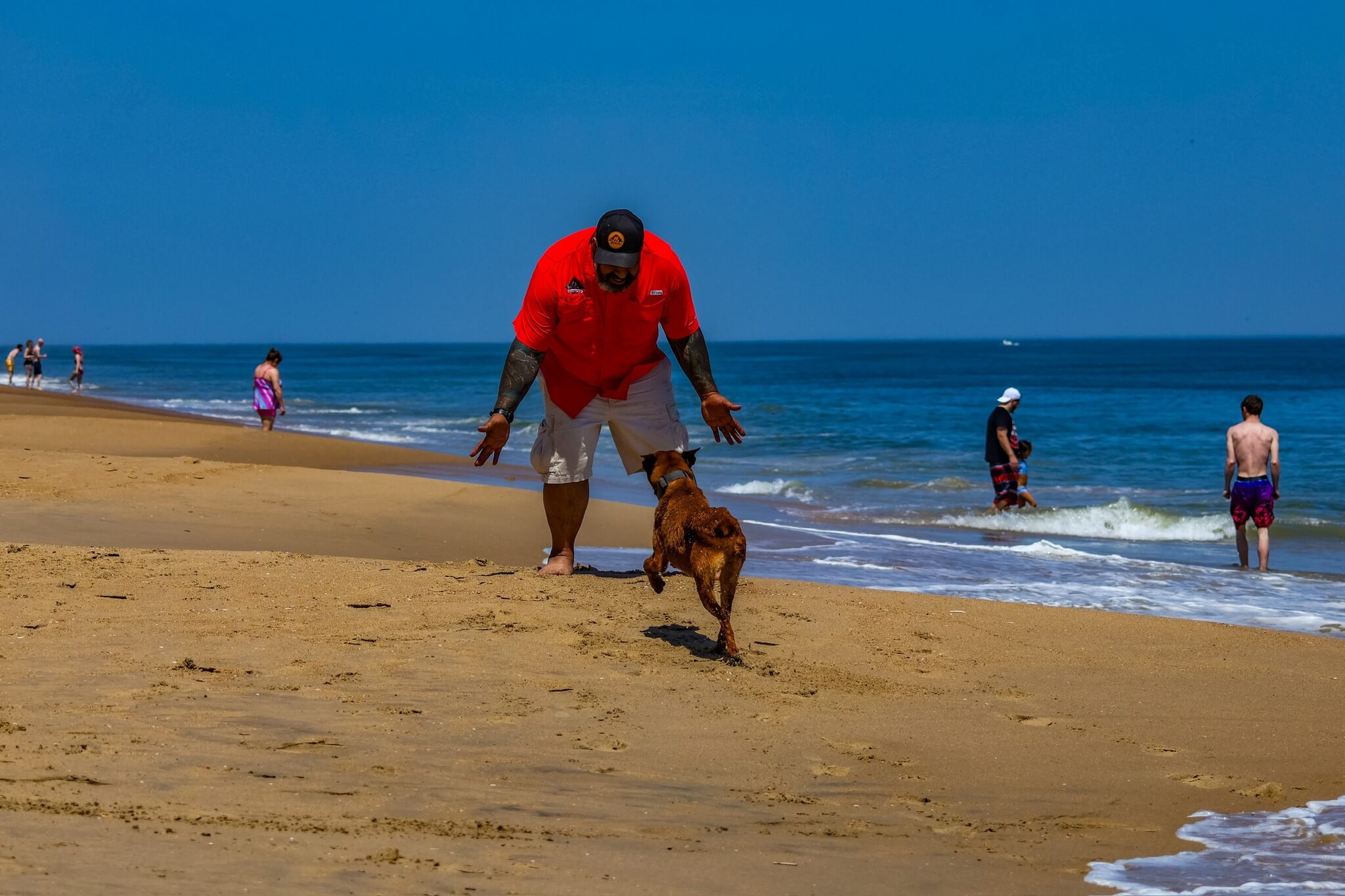
Coastal K9 Academy
2608 Horse Pasture Rd, Virginia Beach, VA 23453
+1 (757) 831-3625
[email protected]
Website: https://www.coastalk9nc.com